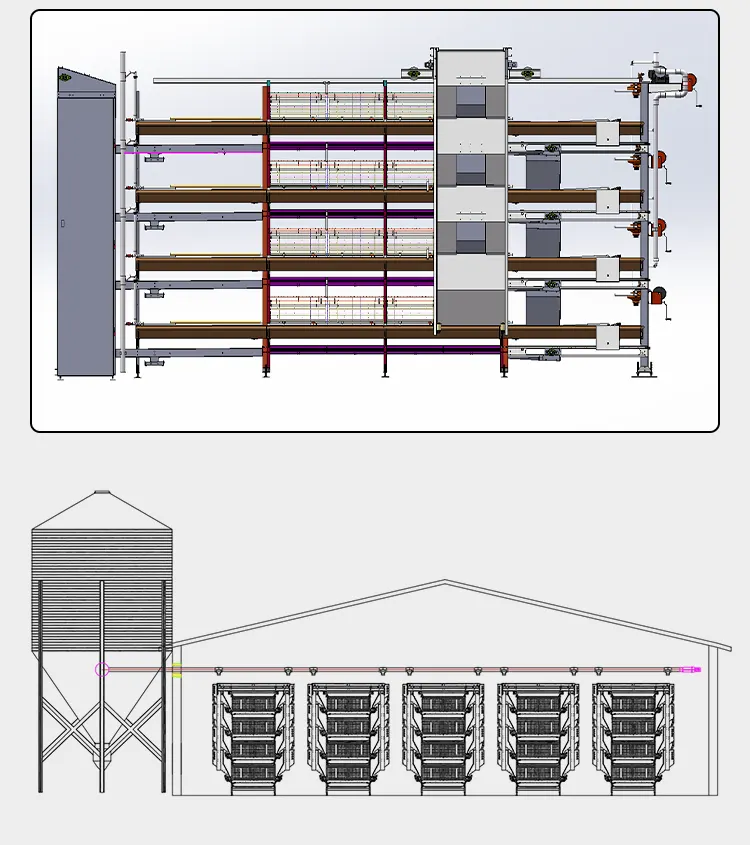
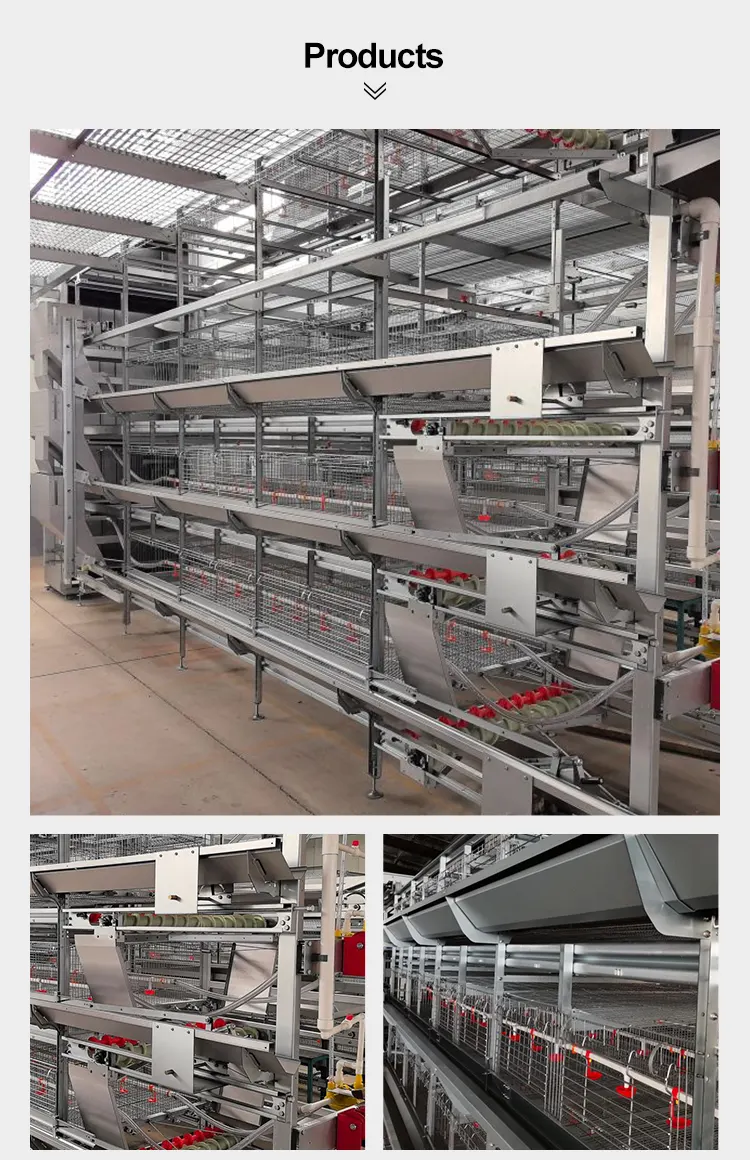
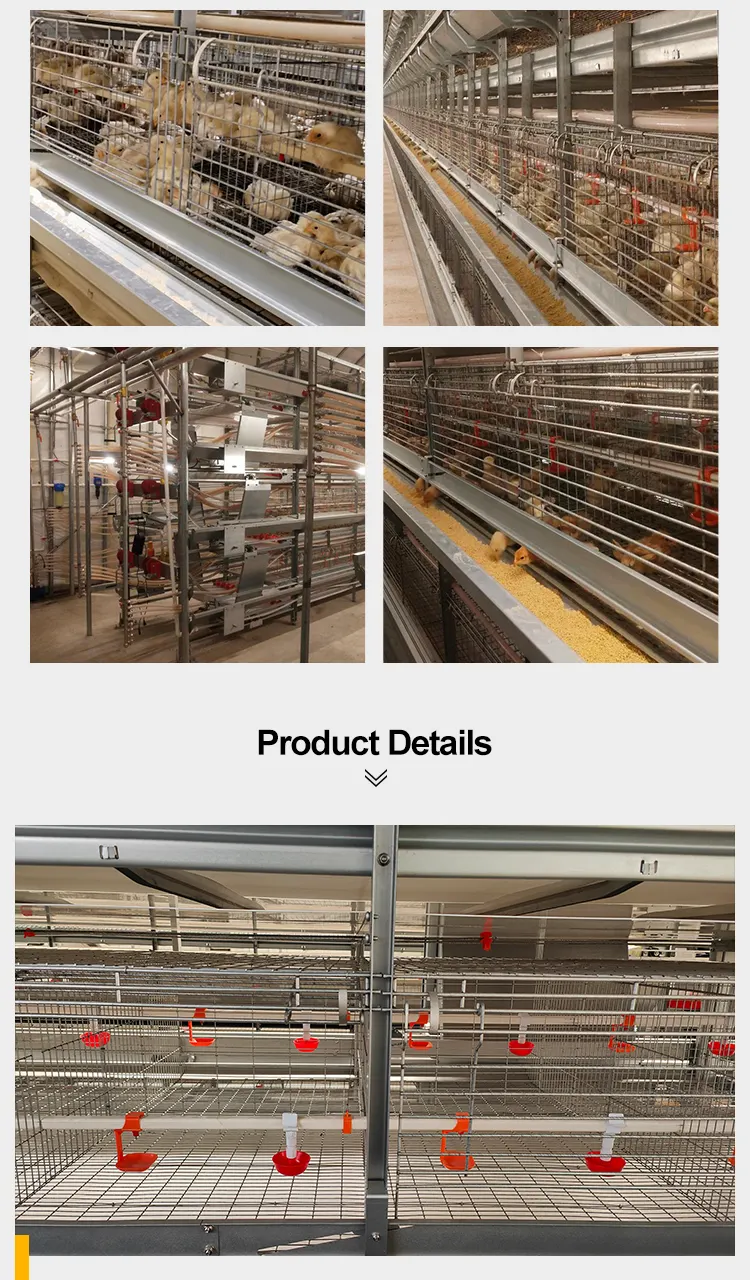
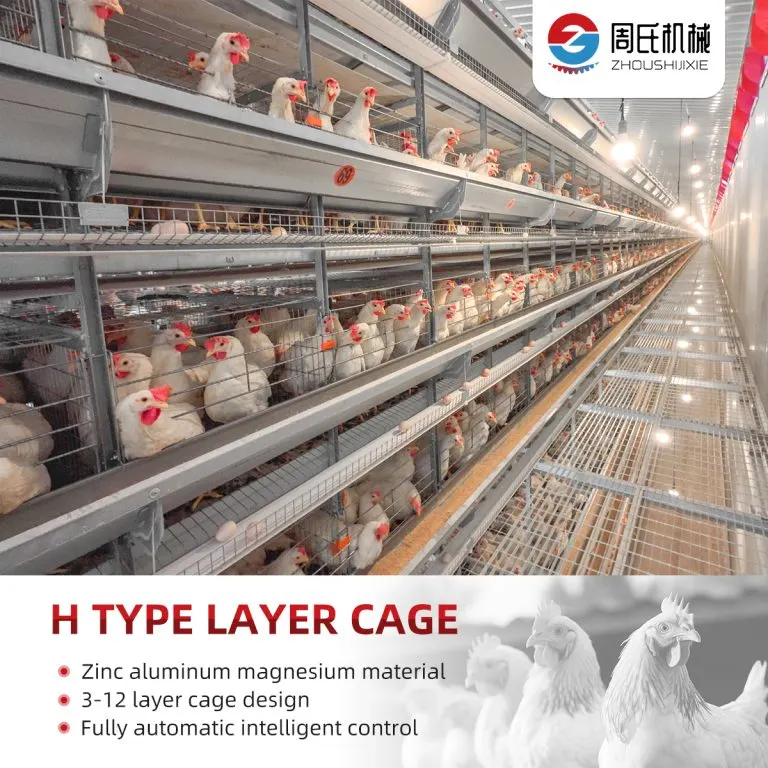
Re-housing pullets three times in ten weeks costs labor, breaks bones and checks growth — which you then pay for again in the first month of lay. Our multi-layer cascading system raises birds from day-old through 7–13 weeks to point-of-lay without ever being moved between systems. Each 1200×1200×410 mm set runs 4 tiers holding 192 birds at 300 cm² each, with the tier profile cascaded so droppings from an upper tier cannot land on the birds below.
The details that matter for chick survival are engineered in: a 700 mm tier height for real air movement at bird level, 48 V waterproof LED lighting on every tier, water lines that raise with the birds from shallow cup height to standing nipple height, and drip cups under every nipple so litter stays dry at brooder temperature.
Key Features
One house, one flock, zero re-housing
Birds enter as day-olds and leave as lay-ready pullets. No catching, no transport stress, no sorting losses — and every bird's intake is visible at its own tier.
Brooding built into the tier
Brooder heating, feed pan height and water line height all adjust with age on the same frame — the first 14 days, where mortality hides, are the best-controlled weeks of the rotation.
48 V LED on every tier
Waterproof low-voltage lighting with the day-old 23+1 photoperiod through to the pullet taper program — the lighting program is run from the frame, not improvised with clip bulbs.
Dry litter, dry feet
Cascade geometry plus drip cups under every nipple keeps the lower tiers dry — wet litter is where coccidiosis and foot problems start, and this frame starves both.
The Rearing Math Behind the Purchase
A 4-tier set at 192 birds means ten sets stock 1,920 pullets in roughly 10 m² of floor plus walkways. Compare that with deep-litter rearing at 10 birds/m² and the house-saving pays the cage premium on paper before the birds arrive. More importantly, pullet uniformity — the number one predictor of a good lay curve — improves when every bird eats at the same feeder height and drinks at the same water line all rearing. Layer farms that hatch or buy in day-olds and cage-raise them consistently report tighter egg-size curves and fewer slow flocks.
Specifying Your System
Send target pullet numbers and your rotation (single-age or multi-age), and we return tier counts, set quantities, heating and lighting notes, plus container plan. MOQ 50 sets; hot-dip galvanized frames rated 20 years; spare pans, nipples and LED drivers ship from the same catalog for the life of the system. Installation videos and drawings are free; engineer dispatch for the first house is available so your crew learns the assembly once, properly.
| Pullet & Brooding Cage System — Specifications |
|---|
| Set dimensions | 1200×1200×410 mm |
| Tiers | 4 (cascade profile) |
| Birds per set | 192 |
| Space per bird | 300 cm² |
| Tier height | 700 mm (ventilation-friendly) |
| Water | Adjustable line + anti-drip cups |
| Lighting | 48 V waterproof LED per tier |
| Age range | Day-old → 7–13 weeks (point of lay) |
| Surface / life | Hot-dip galvanized · ~20 years |
| MOQ | 50 sets · ISO9001 |
Shipping, Payment and After-Sales
We export to customers across Africa, Asia and the Middle East — including Nigeria, Tanzania, Ghana, Uganda, Kenya, Zambia, South Africa, Mozambique, Senegal, Cameroon, Zimbabwe, Malawi, the Philippines, Guyana, Gambia and Equatorial Guinea. Full container loads ship as bulk-packed sets; LCL orders travel in wooden cases.
| Payment terms | 30% deposit, 70% balance before loading — T/T, PayPal, Western Union, MoneyGram |
| Lead time | About 600 sets in stock; 5 days to ship from stock, ~20 days after production; full order preparation in ~2 weeks |
| Container loading (typical layer cages) | 20GP: 130 sets (3-tier) / 100 sets (4-tier) · 40GP: 280 / 210 · 40HC: 300 / 225 |
| Sea transit (reference) | Lagos ~45 d · Mombasa 25–43 d · Tema ~50 d · Cebu/Manila 12–14 d · Durban ~30 d · Maputo ~36 d · Dar es Salaam ~38 d |
| After-sales | Installation drawings and videos free of charge, online guidance, engineer dispatch available, lifelong poultry-farming consultant support |
Why Buyers Choose ZEUSYANG
- Own factory, 15+ years — hot-dip galvanizing, roll-forming and welding lines under one roof in Cangzhou, Hebei. Video factory tours available on request.
- One-stop supply — cages plus feeding, drinking, egg collection, manure removal, ventilation, cooling and environmental control from a single quotation.
- Engineered for longevity — 275 g/m² hot-dip galvanized surfaces rated 15–20 years in house; stainless and aluminum wear parts where corrosion is worst.
- Layout before quotation — send flock size and house dimensions, our engineers return cage layout drawings, equipment lists and FOB prices.
- Delivery you can plan around — about 600 sets in stock, 2 weeks to prepare a full order, 5 days to ship from stock or 20 days after production.
- Installation that works at destination — free drawings and installation videos, online guidance, and engineer dispatch to your farm when needed.